
What is a Screw Gauge?
Have you ever tried to measure the thickness of a single sheet of paper with a regular ruler? It’s almost impossible, right? That is where the screw gauge comes in! It is a clever tool used by scientists and engineers to measure very thin objects like wires, metal sheets, or even a strand of your hair.
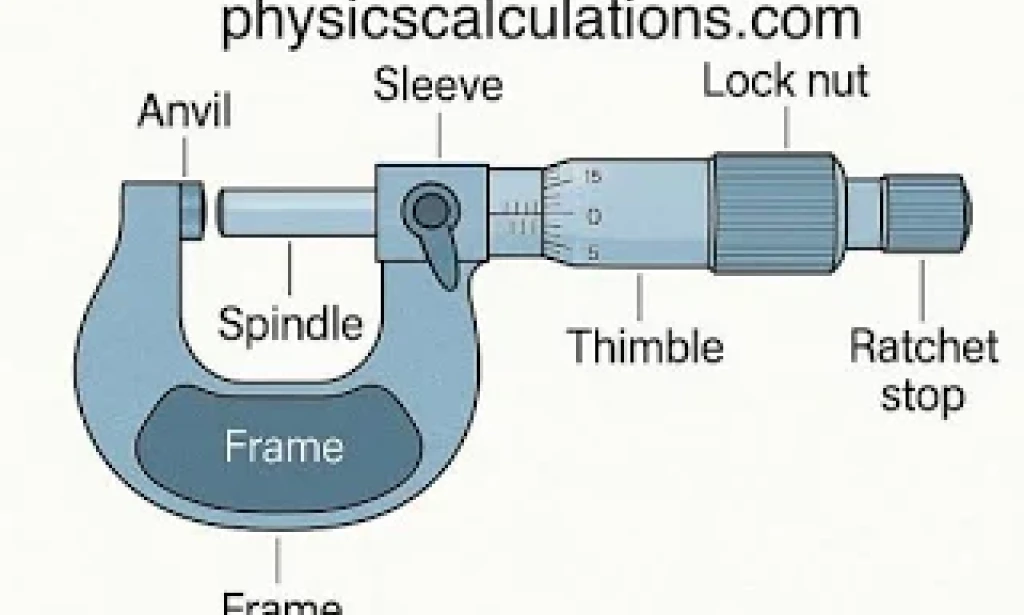
The Parts of a Screw Gauge
A screw gauge might look a bit strange at first, but it is easy to use once you know the parts:
- The U-Frame: This is the metal body that holds everything together.
- The Spindle: This is the part that moves forward and touches the object you are measuring.
- The Thimble: This is the part you turn with your fingers to move the spindle.
- The Ratchet: This is a little knob at the end that makes a 'click' sound. It tells you when to stop turning so you do not crush the object!
How Does it Work?
Think about a screw going into a piece of wood. Every time you turn the screw once, it moves forward a tiny bit. The screw gauge works the same way! When you turn the thimble, the spindle moves forward very slowly. Because it moves such a small distance with every turn, we can measure things much more accurately than we can with a normal scale.
Why is it Important?
In science, being exact is very important. If a part in a watch or a phone is even a tiny bit too big or too small, it won't work correctly. The screw gauge helps people make sure every tiny part is just the right size. It can measure things down to the millimeter and even smaller!
Visit forumbd24.com
Try it Yourself!
Next time you are in a science lab, ask your teacher to show you a screw gauge. Try measuring the thickness of different things, like a piece of thread or a thin copper wire. You will be amazed at how precise this tool can be!

You must be logged in to post a comment.