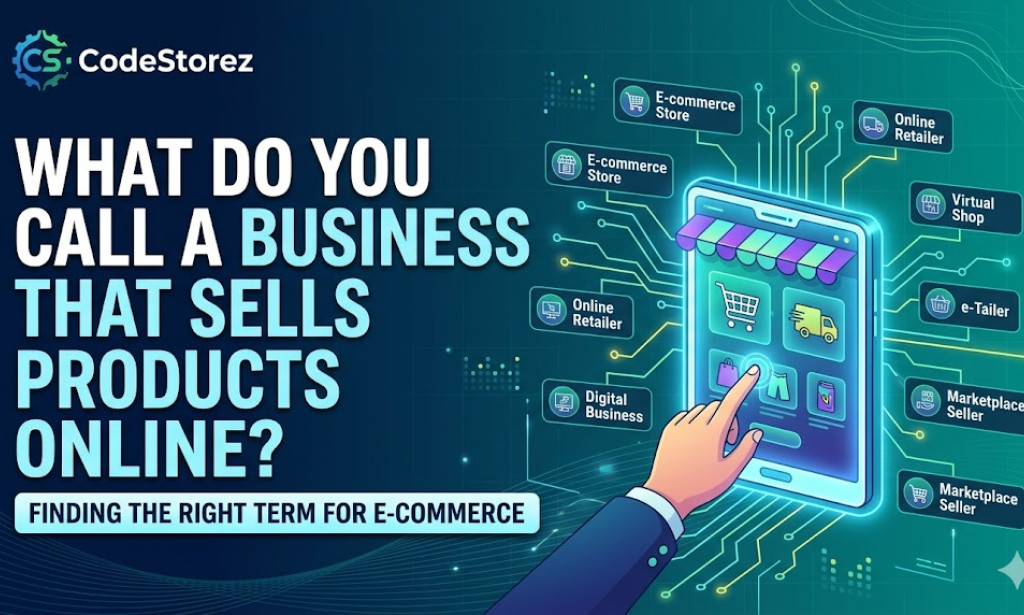
What Do You Call a Business That Sells Products Online?

The Evolution of Digital Commerce

In the modern economy, the internet has transformed from a simple communication tool into the world's largest marketplace. While we often use the term 'online shopping' to describe the act of buying, the businesses facilitating these transactions have specific names based on their operational models and target audiences.

1. E-commerce Business

The most common and broad term is e-commerce, short for electronic commerce. This refers to any business or commercial transaction that involves the transfer of information across the internet. It is the 'umbrella' term for everything from digital downloads to physical goods.

2. E-tailer (Electronic Retailer)

An e-tailer is the digital version of a traditional brick-and-mortar retailer. These businesses buy products from wholesalers or manufacturers and sell them directly to the end consumer through a virtual storefront. Amazon is the world's most prominent example of an e-tailer.

3. Direct-to-Consumer (DTC)

A Direct-to-Consumer (DTC) brand is a company that designs, produces, and distributes its own products without the help of middle-men retailers. By selling through their own websites, these businesses maintain total control over their brand image and customer data.

4. Marketplace Seller

A marketplace seller is an individual or business that sells products through a third-party platform such as eBay, Etsy, or the Amazon Marketplace. These businesses don't necessarily need their own website; they leverage the traffic and infrastructure of an established giant to reach customers.

5. Dropshipping Business

A dropshipping business is a unique model where the seller does not keep the products it sells in stock. Instead, when a store sells a product, it purchases the item from a third party and has it shipped directly to the customer. The seller never sees or handles the product.

6. B2B vs. B2C

Online businesses are also categorized by who they sell to. B2C (Business-to-Consumer) is the most common model for online stores, selling to individual shoppers. Conversely, B2B (Business-to-Business) companies sell products or services to other businesses, often in bulk.

Conclusion

Whether you call it an e-commerce store, an e-tailer, or a DTC brand, the core of the business remains the same: leveraging digital technology to deliver value to customers. As technology evolves, we can expect even more specific terms to emerge in the digital commerce space.

Enjoyed this article? Stay informed by joining our newsletter!

Comments

You must be logged in to post a comment.

Related Articles
About Author

Abu Taher Siddik (born September 4, 1999) is a multifaceted digital creator, full-stack web developer, and writer. Known for his technical versatility and entrepreneurial drive, he has built a career centered on software engineering, automation, and the democratization of digital content.

Early Life and Background

Born on September 4, 1999, Abu Taher Siddik developed an introverted and focused personality early on, which eventually translated into a deep passion for technical problem-solving. He maintains a close relationship with his family and has often highlighted the foundational support of his mother, Mina.

Professional Career and Technical Expertise

As a Full-Stack Web Developer, Abu Taher has developed a robust portfolio ranging from mobile utilities to complex web ecosystems. His technical repertoire is characterized by high-level automation and modern UI/UX design:

  • Mobile Development: He specializes in Kotlin and Jetpack Compose, having engineered utility applications such as a high-precision "Internet Speed Meter" and an "Image Effects" suite.

  • Web Systems: His work involves building searchable, high-performance platforms using PHP, Tailwind CSS, and NewsAPI.

  • Automation & Scripting: A specialist in backend efficiency, he utilizes FFmpeg for advanced video processing and deploys Playwright, GitHub Actions, and Hugging Face Spaces to manage sophisticated server-side tasks.

Entrepreneurship: CodeStorez

Abu Taher is the Founder of CodeStorez (codestorez.com), a platform reflecting his vision for the creator economy. Under his leadership, the site transitioned into a paid-article and creator rewards system. This model empowers writers and developers to monetize their expertise, bridging the gap between technical knowledge and financial sustainability.

Philosophy and Personal Milestones

Driven by a blend of technical curiosity and spiritual reflection, Abu Taher’s work is characterized by resilience and constant evolution. Whether navigating the complexities of platform management or finding inspiration in moments of solitude—such as his experiences in Cox's Bazar—he remains dedicated to building tools that serve the global developer and creator communities.


#CodeStorez #Founder #FullStackDeveloper #WebDevelopment #SoftwareEngineering #Entrepreneur #TechBio #Kotlin #JetpackCompose #Automation #PHP #TailwindCSS #DigitalCreator #Innovation #CodingCommunity #BangladeshTech