
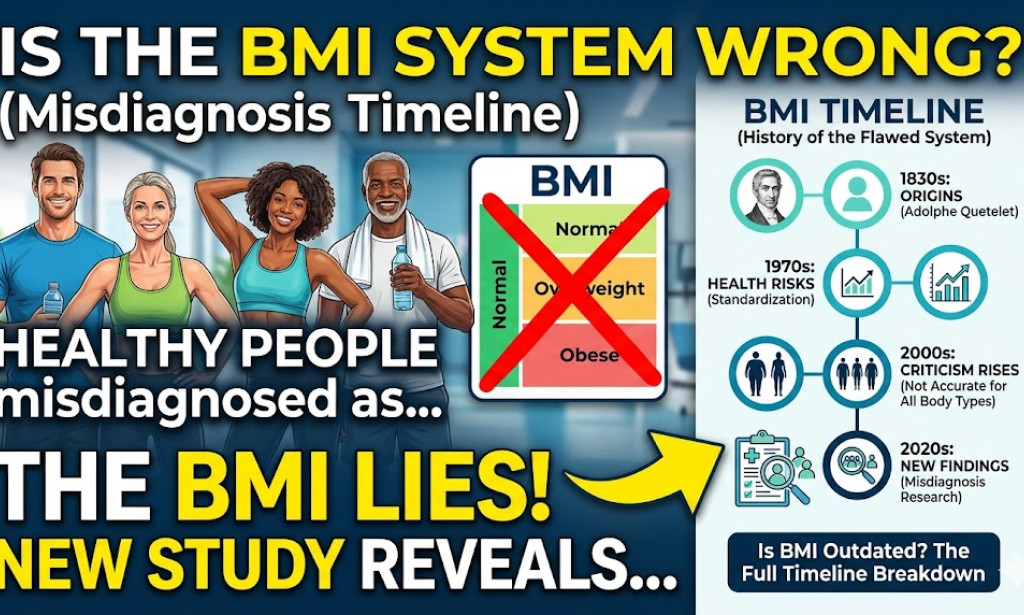
The Long-Standing Rule of BMI
For decades, the Body Mass Index (BMI) has been the gold standard for assessing health based on a simple calculation of weight divided by the square of height. Developed in the mid-19th century by Adolphe Quetelet, it was intended as a tool for population statistics, not individual diagnosis. However, a growing body of research suggests that this formula is not only outdated but potentially harmful in its inaccuracy when applied to modern clinical settings.
What the New Research Reveals
A recent comprehensive study has highlighted a significant discrepancy between BMI scores and actual metabolic health. According to the data, nearly half of the individuals classified as "overweight" and a significant portion of those labeled as "obese" are, in fact, metabolically healthy. Conversely, the study found that many individuals with a "normal" BMI score were found to have underlying health risks such as high blood pressure, high cholesterol, or insulin resistance.
The Critical Flaws of BMI
The primary issue with BMI is its inability to distinguish between different types of body mass. Here are several reasons why the system often fails:
- Muscle vs. Fat: Muscle is significantly denser than fat. Athletes and highly active individuals often have higher BMIs because of their muscle mass, leading to a false classification of being overweight despite having very low body fat.
- Fat Distribution: BMI does not account for where fat is stored. Visceral fat, which is stored around the internal organs, is far more dangerous than subcutaneous fat. BMI treats all weight as equal, regardless of its location or biological impact.
- Demographic Blind Spots: The BMI was originally developed based on data from white European populations. Research shows it often fails to accurately reflect health risks for diverse ethnic groups, as body composition and health risks vary across different ancestries.
The Real-World Consequences
Misdiagnosis isn't just a matter of semantics; it has real-world consequences. People labeled as overweight based solely on BMI may face higher insurance premiums, medical bias from healthcare providers, and unnecessary psychological stress. Furthermore, when doctors rely solely on the scale, they may overlook the "skinny fat" patient who appears healthy by BMI standards but is at high risk for cardiovascular disease due to poor metabolic health.
Looking Beyond the Scale
Health experts are now calling for a more holistic approach to wellness. Instead of relying on a single number, they recommend looking at a variety of markers to get a clearer picture of a person's health:
- Waist-to-Hip Ratio: Often considered a better indicator of dangerous abdominal fat than BMI.
- Metabolic Panels: Blood tests that measure blood sugar, lipid profiles, and markers of inflammation.
- Body Composition Analysis: Tools like DEXA scans or bioelectrical impedance that measure the actual ratio of fat to lean muscle mass.
Conclusion
While BMI can be a useful tool for tracking broad trends in large populations, it is an imperfect and often misleading metric for individual health. As the medical community shifts toward personalized medicine, it is time to move beyond the scale and focus on the complex, multi-faceted nature of human health. True wellness is not defined by a weight-to-height ratio, but by how our bodies function as a whole.

You must be logged in to post a comment.